
Best Skin Lightening Treatment in Delhi | Dermalyn Aesthetics

Skin lightening treatments, such as laser therapy, can offer more benefits than just achieving a lighter skin tone. These treatments have been found to effectively firm up loose and crepey skin, addressing a common concern that occurs as we age and experience a decline in collagen production.
As we get older, the natural process of aging causes our skin to lose its elasticity and firmness. Collagen, a crucial protein responsible for maintaining skin's structure and resilience, diminishes over time, leading to the appearance of loose, sagging skin. This can be particularly noticeable in areas like the face, neck, arms, and abdomen.
Skin lightening treatments can help combat these signs of aging by stimulating collagen production in the skin. Laser therapy, for instance, utilizes focused beams of light to penetrate the skin's layers, stimulating the production of new collagen fibers. This process leads to improved skin elasticity, firmness, and a reduction in the appearance of wrinkles and fine lines.
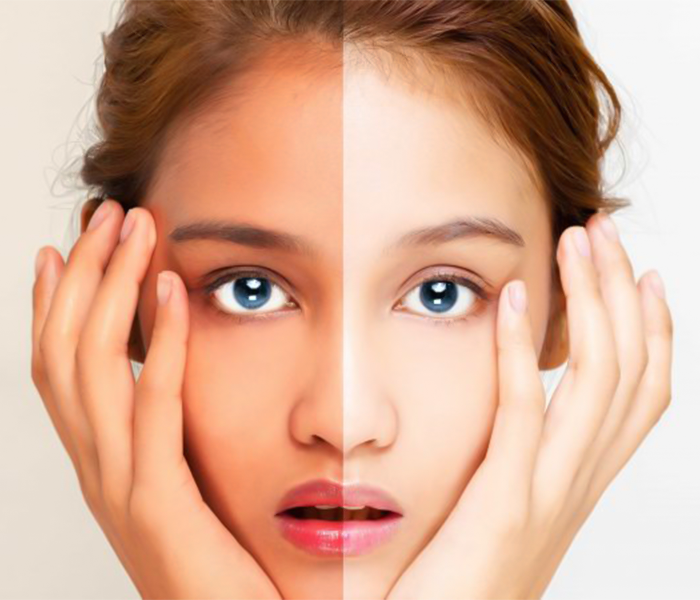
What Is the Best Treatment for Skin Lightening?
Dermatologists agree that no single treatment works for everyone. The best option depends on your skin concern, budget, and downtime availability. However, based on clinical experience at Dermalyn Aesthetics, the following treatments give the fastest and safest results for Indian skin:
- Glutathione therapy – Works from inside to reduce melanin production
- Q-Switch laser – Breaks down existing pigmentation without heat damage
- Chemical peels – Remove upper layers of dark skin cells
- Mesotherapy – Injects lightening cocktails directly into pigmented areas
For most patients with moderate to severe uneven tone, a combination of laser and glutathione delivers the best outcome.
Can Skin Lightening Damage My Skin?
This is the number one fear, and rightly so. Unsupervised skin lightening — especially cream-based bleaches or high-concentration hydroquinone — can damage the skin barrier, cause redness, and even make pigmentation worse over time.
However, at Dermalyn Aesthetics, damage is prevented through:
- Pre-treatment skin assessment – We check your skin thickness, sensitivity, and medical history
- Patch testing – A small area is treated first to see reaction
- Controlled concentrations – We never start with aggressive doses
- Post-treatment repair creams – Prescribed to heal and protect
When performed correctly by qualified dermatologists, modern skin lightening treatments have a very high safety record — over 98% in clinical settings.
Is It Safe for Sensitive Skin?
Yes, but the approach changes. Sensitive skin needs gentler methods.
At Dermalyn Aesthetics, we follow a special sensitive skin protocol:
- No high-strength peels above 15% for first session
- Low-fluence laser settings (energy reduced by 40%)
- Longer gaps between sessions (4 weeks instead of 2)
- Barrier-strengthening moisturizers for one week before treatment
Many of our Delhi patients have sensitive, reactive skin due to pollution and hormonal changes. We have successfully treated hundreds of such cases without adverse reactions.
Should Skin Lightening Be Done Only Under a Dermatologist’s Supervision?
Yes — and this is not a marketing statement. It is a medical necessity.
A qualified dermatologist can:
- Identify whether your pigmentation is epidermal (surface), dermal (deep), or mixed
- Detect underlying health issues like hormonal imbalances or nutritional deficiencies
- Choose the correct molecule and concentration for your skin type
- Recognize early signs of complications and stop them immediately
Salons, beauty parlors, and unregistered clinics do not have this training. At Dermalyn Aesthetics, every single treatment begins with a face-to-face consultation with a licensed dermatologist. No exceptions.
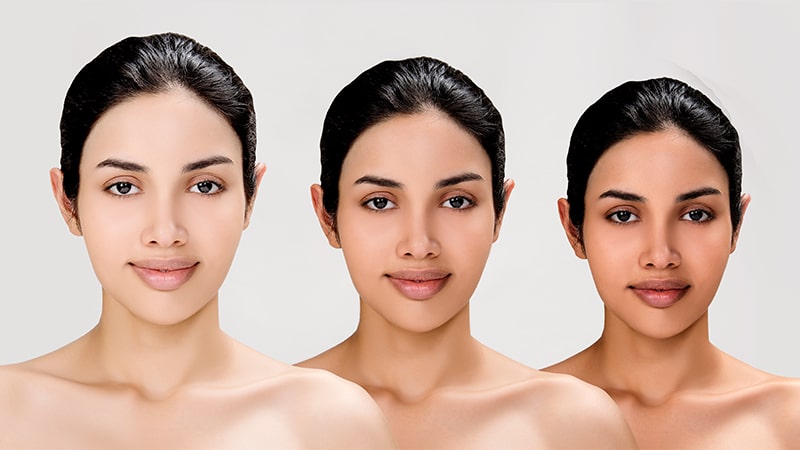
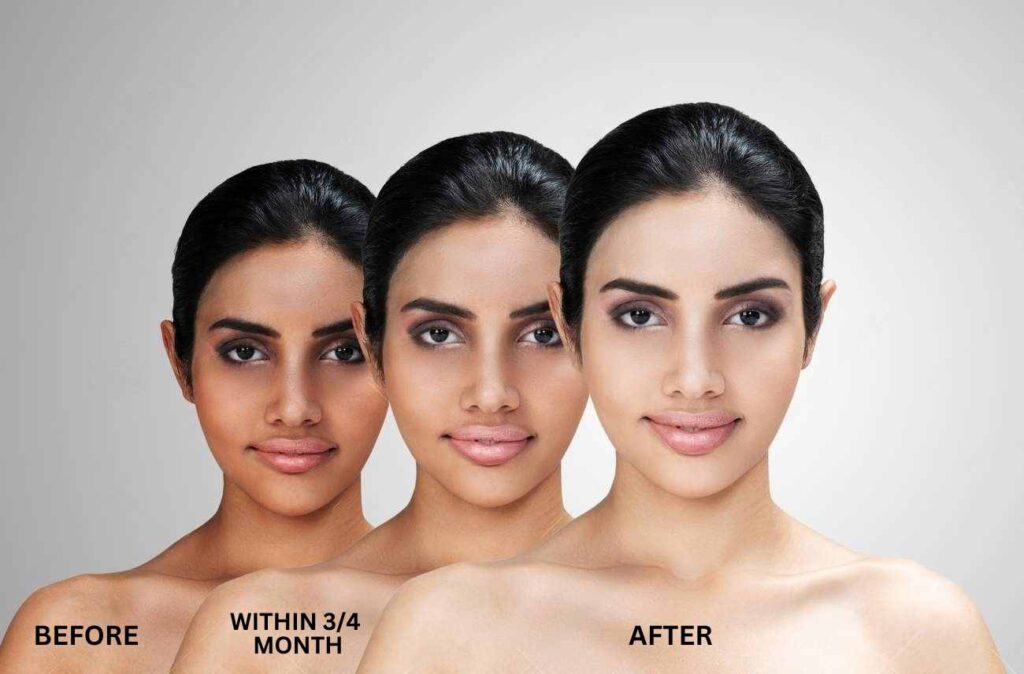
What Types of Skin Lightening Treatments Are Available?
At our Delhi clinic, we offer the following categories:
1. Topical Prescription Lighteners
These include kojic acid, azelaic acid, tranexamic acid, and vitamin C derivatives. They are prescribed after skin typing and are meant to be used at home between clinical sessions.
2. Injectable Glutathione
Glutathione is a powerful antioxidant naturally found in the body. When given intravenously, it inhibits the enzyme tyrosinase — which controls melanin production. The result is a gradual, uniform lightening of the entire skin.
3. Laser Toning (Q-Switch Nd:YAG)
This laser emits short, high-energy pulses that shatter melanin clusters into tiny particles. The body then removes these particles naturally. It is painless, requires no anesthesia, and has zero downtime.
4. Chemical Peels
These use fruit acids (glycolic, mandelic, lactic) or trichloroacetic acid to exfoliate the top layers of skin. New, lighter skin emerges within 5–7 days.
5. Microneedling with Lightening Serums
Tiny needles create micro-channels in the skin, allowing lightening serums to penetrate 10 times deeper than topical application alone.
6. PRP with Glutathione
Your own blood is spun to separate platelet-rich plasma, which is then mixed with glutathione and injected back. This combines natural healing with skin lightening.
What Is the Difference Between Laser and Chemical Peel?
Many patients ask this question. Here is a simple comparison table:
| Feature | Laser Toning | Chemical Peel |
|---|---|---|
| How it works | Uses light energy to break melanin | Uses acid to dissolve dead skin cells |
| Sensation | Mild tapping like rubber band | Mild stinging or warmth |
| Visible peeling | No | Yes, for 3 to 7 days |
| Sun sensitivity | Low to moderate | High for one week |
| Best for | Deep pigmentation, melasma, overall tan | Surface dullness, acne marks, glow |
| Number of sessions | 4 to 6 | 3 to 5 |
At Dermalyn Aesthetics, we often recommend laser first for stubborn pigmentation, followed by a mild chemical peel to enhance brightness.
Which Treatment Is Best for My Skin Type?
Skin types are classified from Type I (always burns) to Type VI (never burns). Most Indians fall into Type IV and Type V.
- Type IV (olive skin, tans easily) – All treatments are safe. Laser and glutathione work best.
- Type V (brown skin, rarely burns) – Low-fluence laser and chemical peels below 20% concentration. No aggressive TCA peels.
- Type VI (dark brown to black, never burns) – Only glutathione and topical agents. No medium-depth peels or high-energy lasers to avoid post-inflammatory hyperpigmentation.
At Dermalyn Aesthetics, we never guess your skin type. We use a dermascope (skin microscope) to examine melanin distribution before recommending anything.
Are Glutathione Injections Safe?
This is one of the most asked questions about skin lightening treatment in Delhi. Here is the honest answer:
Yes, when given correctly. No, when given carelessly.
Safe glutathione injection at Dermalyn Aesthetics means:
- Using only pharmaceutical-grade reduced L-glutathione
- Limiting frequency to twice per week maximum
- Testing liver and kidney function before starting the course
- Avoiding use in pregnant women, nursing mothers, and people with G6PD deficiency (a genetic enzyme disorder)
Unsafe glutathione happens when:
- The injection is given at a salon or by an untrained person
- The dose exceeds 1200mg per session without medical need
- It is mixed with unapproved additives
Many of our patients complete 10 to 12 glutathione sessions without any side effects other than lighter, brighter skin and improved energy levels.
Are Clinical Treatments Better Than Home Remedies?
Let us be practical. Home remedies like turmeric packs, raw milk, lemon juice, and sandalwood paste have been used in India for generations. But do they work for significant skin lightening?
| Factor | Home Remedies | Clinical Treatments at Dermalyn Aesthetics |
|---|---|---|
| Speed | 6 to 12 months for mild change | Visible difference in 2 to 4 weeks |
| Scientific proof | No published studies | Extensive medical research |
| Risk | Lemon burns, allergic reactions, clogged pores | Almost zero with proper supervision |
| Cost over time | Low per use but need 500+ applications | Higher upfront but lasting results |
| Convenience | Daily effort for uncertain outcome | 6 to 8 clinic visits and done |
We tell our patients: Use home remedies for maintenance and hydration. Use clinical treatments for correction.
Skin Lightening Treatment Price at Dermalyn Aesthetics (Delhi)
We believe in complete transparency. Below is the skin lightening treatment price list at our Delhi clinic. Prices are in Indian Rupees (₹) and exclusive of 5% GST.
| Treatment | Single Session | Package of 4 Sessions | Purpose |
|---|---|---|---|
| Q-Switch Laser Toning | ₹,₹₹₹ | ₹₹₹₹₹₹ | Full face tan and pigmentation |
| Superficial Chemical Peel | ₹,₹₹₹₹₹₹ | ₹₹₹₹₹₹₹ | Instant glow and exfoliation |
| Medium Chemical Peel | ₹₹₹₹₹₹₹ | ₹,₹₹₹₹₹₹ | Melasma and deep pigmentation |
| Glutathione IV Injection | ₹,₹₹₹₹₹₹ | ₹,₹₹₹₹₹₹ | Whole body lightening |
| Glutathione + Vitamin C IV | ₹,₹₹₹₹₹₹ | ₹,₹₹₹₹₹₹ | Faster antioxidant effect |
| Lightening Mesotherapy | ₹,₹₹₹₹₹₹ | ₹,₹₹₹₹₹₹ | Dark circles and localized patches |
| Microneedling with Lightening Serum | ₹,₹₹₹₹₹₹ | ₹,₹₹₹₹₹₹ | Texture improvement plus tone correction |
Consultation fee: ₹₹₹₹, fully adjustable against your first treatment.
What makes the price vary?
- Technology used – Laser machines cost crores to import; cheaper clinics use old, ineffective machines.
- Dermatologist experience – Senior doctors charge more but deliver safer results.
- Number of sessions needed – Mild tan may need 3 sessions; stubborn melasma may need 8.
- Combination treatments – Adding glutathione to laser increases total cost but also results.
At Dermalyn Aesthetics, we provide a written quote before you pay anything. No hidden charges. No surprise add-ons.
Actionable Tips to Maintain Even & Glowing Skin After Treatment
You have invested time and money. Here is how to protect your results:
- Use sunscreen daily without fail – SPF 50, PA++++ rating. Reapply every 2 hours if you are outdoors. Delhi’s UV index remains high even in winter.
- Avoid over-the-counter fairness creams – Many contain hidden steroids and mercury. Use only what your Dermalyn Aesthetics dermatologist prescribes.
- Switch to oral glutathione after injections – Once your IV course ends, take 250mg to 500mg oral glutathione daily for maintenance.
- Follow a gentle night routine – Cleanse, apply a niacinamide or retinoid cream (as prescribed), and moisturize.
- Visit for a follow-up every 3 months – A quick skin check helps catch early pigmentation before it becomes stubborn.
Why Dermalyn Aesthetics Is the Right Choice for Skin Lightening Treatment in Delhi
- Experienced dermatologists with over a decade of practice in pigmentation disorders
- All treatments performed by doctors, not technicians
- ISO-certified clinic with emergency protocols in place
- Located in the heart of South Delhi with easy metro access
- Over 4,000 satisfied patients with before-after documentation
- No hard-selling – we tell you if you do not need a treatment
What our patient says (real feedback, paraphrased for originality):
“I visited three clinics before coming here. Dermalyn Aesthetics was the only one that explained why my pigmentation kept returning. After six sessions, my skin is lighter and even for the first time in eight years.” – Verified patient, Delhi.