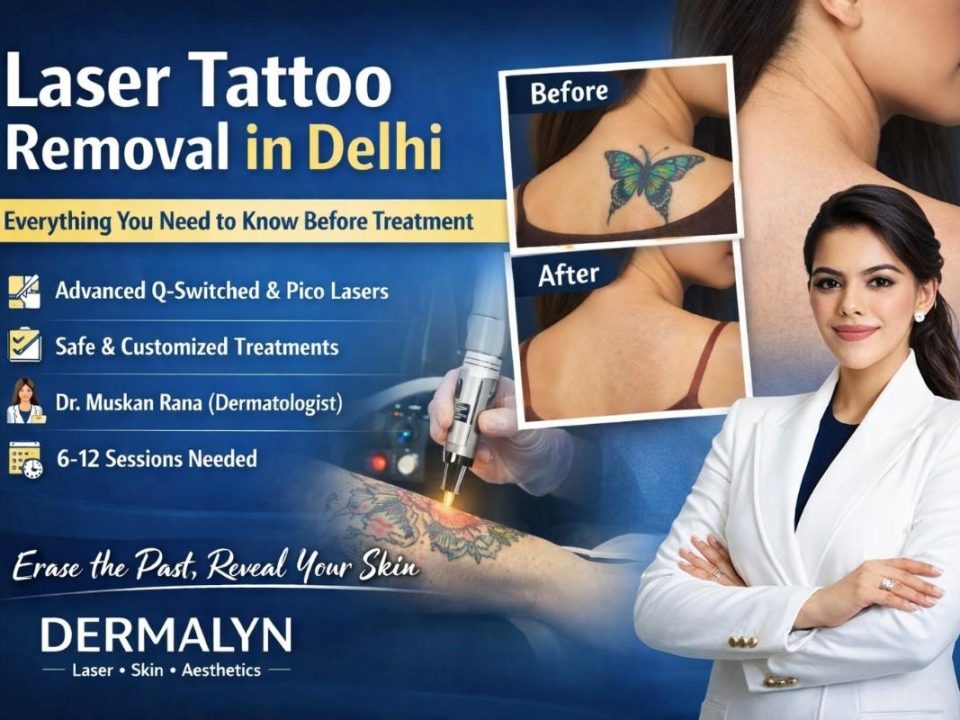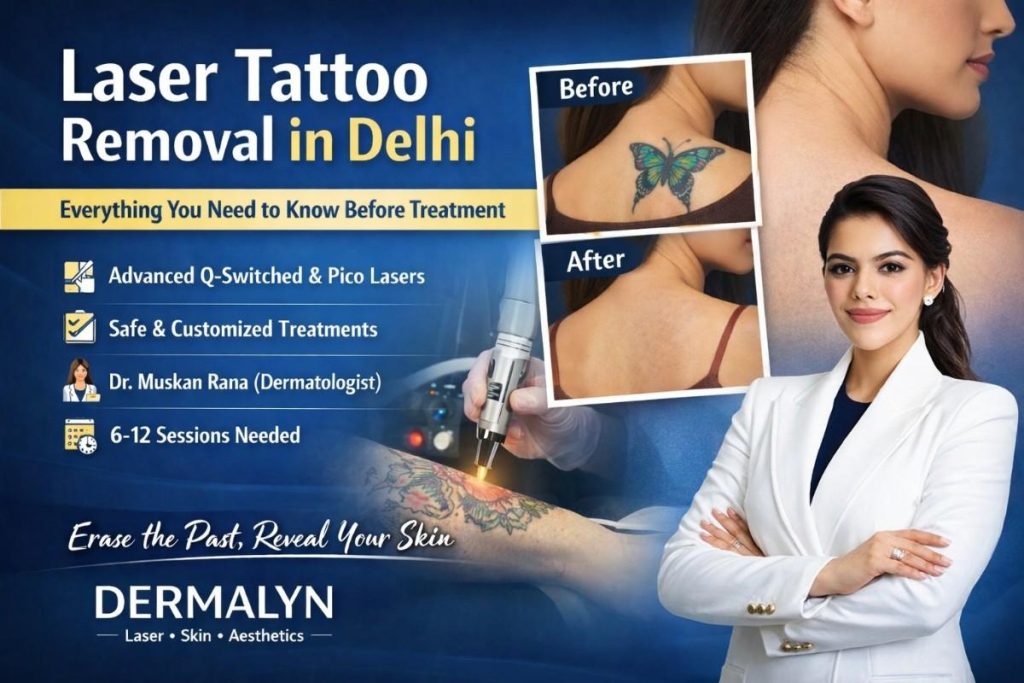
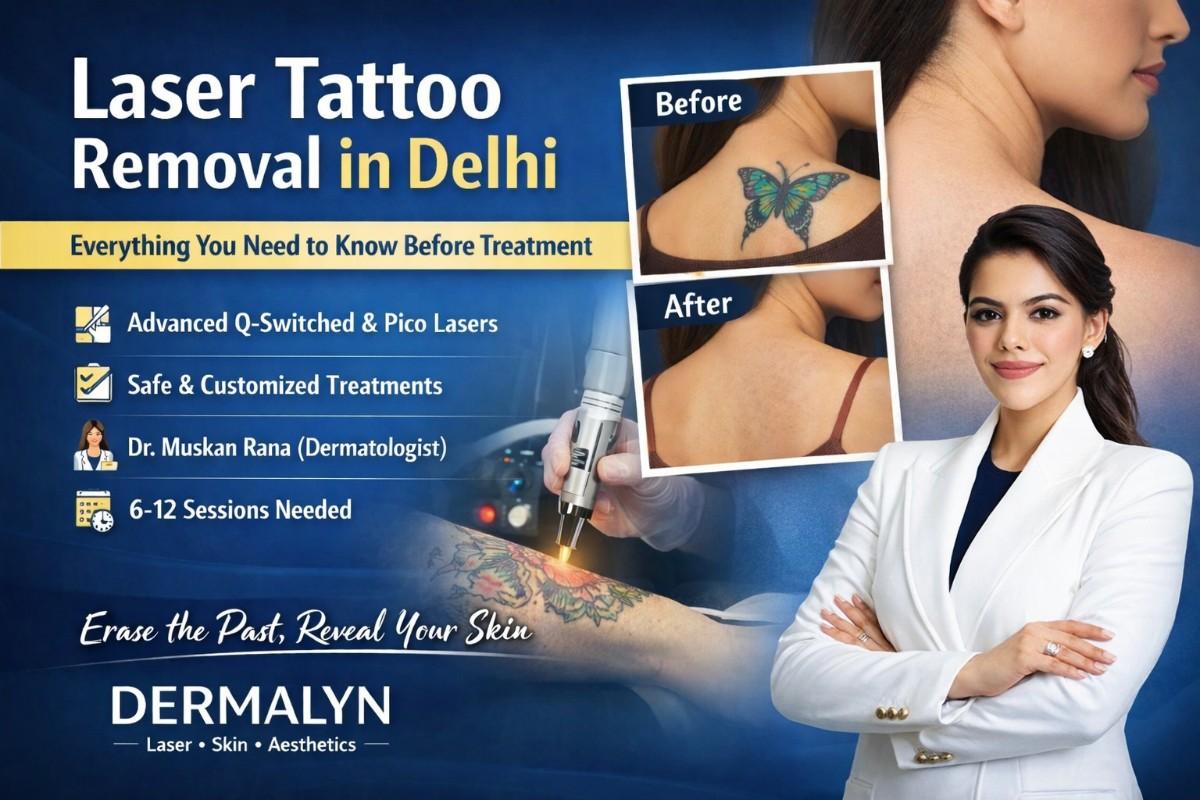
Laser Tattoo Removal in Delhi: Everything You Need to Know Before Treatment
April 18, 2026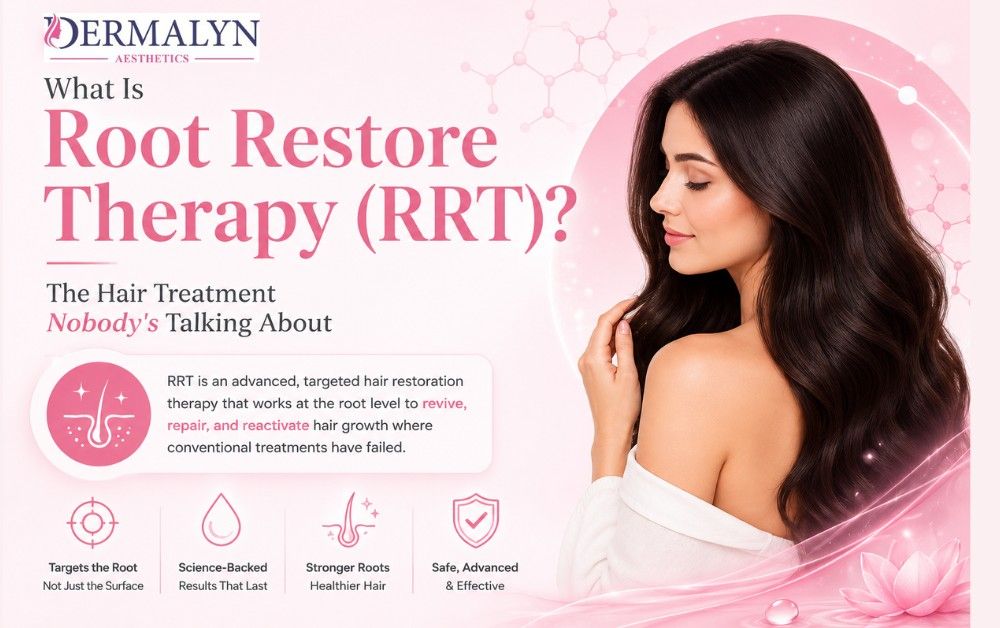
You’ve been using all the available shampoos. You’ve changed your diet, you’ve been on biotin supplements and you’ve even applied some hair oils that claimed some miraculous regrowth. But the erosion goes on, little by little and quiet, steadily. But what if it was not about the hair at all, but what’s going on right at the roots?
Root Restore Therapy (RRT) was created for just that reason.
Most people don’t know about RRT, which is one of the most sophisticated and effective hair restoration treatments for aesthetic medicine today. It intersects trichology, regenerative medicine and aesthetic science at the most profound level of the hair follicle to revitalize, repair and reactivate hair growth beyond the reach of traditional approaches.
But in the clinical practice of one of the most trusted names in skin and hair care in Delhi, Dermalyn Aesthetics, Dr. Muskan Rana is helping patients understand and avail this powerful therapy; as in her experience, it is a therapy that surprises even the most sceptical patients.
We have taken every effort to explain everything you need to know about RRT — from what it is, how it works, who it is for and why it might be the hair treatment you’ve been looking for.
The True Problem With Hair Loss — The reason most treatments miss the mark
Knowing the importance of Root Restore Therapy, you must first realize why all the other hair loss treatments fail.
When people see their hair thinning or falling out, they usually go for a topical product; shampoo, serum or spray. It’s surface treatments with these products. They can help to enhance the quality of the hair shaft, boost shine or temporarily minimize breakage. But the vast majority of hair loss issues not start on the surface. They start at the base of the hair, at the hair follicle.
Hair follicles are living complex structures in the dermis of the scalp. It has its own blood supply, it grows and rests, and it has its own population of stem cells that regenerate new hair. So any kind of outer layer treatment will not help if there’s trouble at this level – whether it’s poor circulation, chronic inflammation, hormonal disruption, oxidative stress or dormant stem cells.
Root Restore Therapy is the space in between.
The RRT system acts at the follicular level (directly on hair’s biological environment). It does not just lay on top of the hair shaft or cause superficial circulation. It releases active therapeutic agents, growth signals and regenerative support right at the source of the hair loss – the roots.
Root Restore Therapy (RRT) is what?
Root Restore Therapy or RRT, is a multi-dimensional, medically prescribed hair restoration plan that consists of targeted hair scalp treatments, follicle stimulating methods, and regeneration biological agents to restore a weakened, dormant, or damaged scalp to health and for healthy, long-lasting hair growth.
The name “Root Restore” is very purposeful. The aim of RRT is not only to stimulate temporary hair growth, but to actually restore the follicles natural ability to grow strong and healthy hair on their own and on a regular basis for the longterm.
RRT is not one remedy or solution. It is a sequence of carefully orchestrated therapeutic procedures that are usually performed sequentially, using a combination of treatments for each of the various components of follicular dysfunction. These may include:
- Nutrient delivery to the follicular environment (scalp micronutrient delivery) – direct delivery of vitamins, minerals, peptides and amino acids to the follicular environment.
- Growth factor stimulation – stimulating the growth factors already present within the follicle
- Detoxification and regulation of sebum — removal of blockages in the follicles, excess DHT (androgenic) and inflammatory debris that inhibit the follicles function.
- Microcirculation enhancement is a process of improving the flow of blood to the dermal papilla, which is the nutrient delivery centre of the follicle.
- The process of “stem cell activation” involves awakening dormant follicle stem cells that are no longer producing new growth cycles.
This multi-faceted strategy is what sets RRT apart from conventional treatments for hair loss. Instead of targeting one factor, it deals with the whole hair follicle system — which is why it works even when single-mechanism treatments have been unsuccessful.
Dr. Muskan Rana at Dermalyn Aesthetics creates a unique Root Restore Therapy protocol for each patient, depending on the trichological examination of the scalp and the root causes that are the cause of hair loss.
How Does Root Restore Therapy Work? The Science Behind It
It is important to understand the biology of a hair follicle and its growth cycle to understand what RRT does.
Each of your head’s hairs experiences three phases:
- Anagen (growth phase) is when the hair shaft is active and being created. Can live for two to seven years or more, depending on your genetics, health and age.
- Catagen (transition phase) — A short period of time, 2-3 weeks in which the catagen follicle contracts and stops receiving nourishment from the blood.
- Telogen (resting phase) — (2-4 months) Old hair falls out and the hair follicles lie dormant before undergoing a new anagen growth phase.
Normally, most of the follicles are anagen (growth stage) at any given time. Any type of hair loss – from androgenetic alopecia to stress-induced telogen effluvium to nutritional deficit hair loss – upsets this balance. The follicles go into the telogen stage earlier than usual, the anagen phase becomes shorter and shorter hairs become shorter and weaker and eventually some follicles become miniaturized and don’t produce hair at all.
Root Restore Therapy works in many ways to interrupt this cycle:
- At the dermal papilla — The dermal papilla is a group of specialised cells at the bottom of each hair follicle that regulates the signals that make hairs grow. RRT uses biological agents that activate the signalling pathways that stimulate the follicle to re-enter the anagen phase with growth factors directly delivered into this area.
- Hair Follicle stem cells in the bulge region of the hair follicle are the cells that kick off every new hair growth cycle, at the stem cell niche. In most types of hair loss, the stem cells do not necessarily die, they just go into a state of dormancy, and they wait for a biological cue that will trigger them to re-emerge. The cells are awakened in RRT, so that they can regenerate themselves.
- On a microvascular level — Each follicle is nourished by a dense network of small blood vessels. This microcirculation is disrupted, especially during scalp tension, androgenetic alopecia and chronic stress, and the follicles get weaker and weaker over time. RRT features methods for improving the microcirculation in the scalp so that all hair follicles get the nourishment they require.
- On the inflammatory front — Chronic low grade scalp inflammation is now known to be a huge contributor to hair follicle miniaturisation and premature shedding at the inflammatory level. RRT treats this inflammatory load by removing it from the follicle, thereby enabling a healthy growth to start again.
Root Restore Therapy is available for:
The first question patients ask is if RRT is suitable for them and their unique form of balding. All is not awful, as Root Restore Therapy works on a variety of hair and scalp issues.
Androgenetic Alopecia (Pattern Hair Loss)
Pattern hair loss is the most prevalent condition in males and females and is due to the hormone Dihydrotestosterone (DHT) which causes progressive miniaturisation of the follicles. The RRT is designed to combat this miniaturisation, prolong the anagen stage and re-strengthen affected follicles.
Telogen Effluvium
This type of hair loss is generalized and occurs when there is a physical or emotional stress, illness, rapid weight loss, nutritional deficiency or hormonal imbalance (pregnancy or thyroid). RRT restarts the follicle growth cycle and speeds up the process of regaining normal hair density.
Patients who have had hair thinning after an illness, infection, or medical treatment (like chemotherapy) may require a lot of work before their hair can grow back. RRT is one of the biological supports necessary during this recovery stage.
Postpartum Hair Loss
Postpartum hair loss is a very common issue, especially for new mothers; postpartum hair loss takes place when the hormones return to normal after delivery and a large number of follicles enter into the telogen phase at the same time. RRT can help to significantly reduce recovery time and restore density quicker.
Chronic psychological stress increases cortisol, which stops the hair follicles from cycling and makes them more sensitive to the effects of DHT. RRT not only works on the direct effects of stress on the follicles, but also on the inflammatory effect.
Many patients have areas of hair thinning for which they can’t seem to find one specific reason. In such instances, it’s usually a complex problem that involves various nutritional deficits, scalp inflammation, compromised microcirculations, and limited hormonal fluctuations compounding each other. The multi-mechanism approach of RRT is very appropriate for these complex presentations.
Root Restore Therapy vs. Other Hair Treatments
Common questions that patients ask at Dermalyn Aesthetics are how RRT is similar to other popular hair loss treatments they may have heard of. Here’s a real-life comparison:
RRT (Platelet-Rich Plasma) is a PRP therapy that involves using the patient’s blood to concentrate the growth factors that are injected into the scalp. It is a great treatment and acts by delivering growth factors to the follicles. While some mechanisms are common to both RRT and PRP, RRT is a more comprehensive protocol, encompassing follicular nutrition, scalp inflammation, microcirculation, and activating stem cells in addition to the delivery of growth factors. Private Dr. Muskan Rana uses PRP in many cases as a part of a complete RRT protocol.
Minoxidil is a topical drug that functions through 2 mechanisms: increasing the length of the anagen phase and enhancing the blood flow to the scalp. It works with a wide number of patients, but there are some drawbacks: It cannot be used for a one-time treatment and as soon as the user stops using it, hair loss occurs again. RRT attempts to restore the biological ability of the follicle, and is not a maintenance dependency.
RRT vs. Hair Transplant Surgery
A hair transplant surgically moves healthy follicles from a donor area to areas of thinning. It is a lifelong treatment for some patients, but will need surgery, more time off and it will cost more. RRT is not a substitute for transplant in the case of advanced hair loss, however it can be a great option for those who haven’t reached the stage where they need a hair transplant and it can also be used post-transplant to help the body accept the transplants and to keep the scalp healthy.
The difference between RRT and Scalp Mesotherapy is that in the former, substances are injected into the dermis of the scalp, while in the latter, the substances are injected into the top layer of the scalp. It’s a component that can be part of an RRT protocol but mesotherapy alone treats only the nutritional part of the health of the follicles. RRT is more comprehensive.
What You Can Expect of Root Restore Therapy At Dermalyn Aesthetics
Your RRT journey at Dermalyn Aesthetics starts with a detailed consultation with Dr. Muskan Rana. This involves a visual and dermoscopic examination of the scalp, a hair density assessment, miniaturisation patterns, scalp health and a medical history, diet, stress and previous hair treatment. In order to create the best RRT protocol for you, it is important to determine what is causing your hair loss.
Dr. Muskan Rana creates a personalised Root Restore Therapy plan for you based on your evaluation. This can be a combination of scalp micronutrient infusion, growth factor treatments, anti-inflammatory scalp therapy, microcirculation techniques and home care suggestions – all customized and prioritized for your individual hair loss pattern.
Treatment Sessions
RRT sessions are in-clinic at Dermalyn Aesthetics. The average sessions are 45 to 90 minutes. These are minimally invasive procedures and patients feel only a slight sensation when being treated, but they are usually comfortable and well-tolerated.
Progressive Results
Like anything else, hair restoration is a process that requires patience and time, and Progressive Results is no exception. Within 4-6 weeks, most patients can start to see a decrease in shedding. You will see enhanced density and thickness in your hair 3-4 months after beginning treatment. Full results generally are evaluated at 6 to 12 months.
After the first protocol, Dr. Muskan Rana suggests a Hair Maintenance plan based on the hair loss pattern and response to the protocol. This supports to continue and expand the effectiveness achieved.
Why Root Restore Therapy is Different — And Why It Works
The majority of hair loss treatments are based on a single mechanism. They either inhibit DHT activity, or increase blood flow, or feed, or introduce growth factors. All of these can have some validity — but hair loss is seldom a one-mechanism matter.
The skin on the scalp is a complex environment. However, if disrupted, many systems are likely to be affected at once. If you are only repairing one, it is like fixing one wall of a house that has water damage but not the other walls.
The key to Root Restore Therapy is that it treats the follicles all at once. It isn’t just about the symptom, the thinning hair, it’s about the whole biological environment in which hair grows. If the follicular environment is truly restored, then hair isn’t only going to grow, it’s going to grow healthier and stronger and more sustainably than ever before.
When Dr. Muskan Rana, Dermalyn Aesthetics, says that RRT is a restorative treatment instead of a symptomatic one, she is referring to its ability to treat the underlying cause of skin aging rather than just addressing its symptoms. The purpose is to prevent the failure of follicles for the long term not to actually regenerate their ability to function.
Is Root Restore Therapy Safe?
Yes. Root Restore Therapy performed by Dr. Muskan Rana at Dermalyn Aesthetics is a safe and clinically indicated therapy. The agents and techniques used are biocompatible and known in aesthetic and trichology.
Side effects are usually mild and short-lived: tenderness, redness or mild swelling at treatment areas that last for 24-48 hours.
Thorough pre-treatment consultation makes sure any contraindications are known before the treatment takes place. Dr. Muskan Rana checks for these autoimmune diseases of the scalp during the evaluation, but they are excluded from RRT treatment during pregnancy or when there is an active infection of the scalp.
Looking to give your hair a chance to recover?Hair loss is not merely a cosmetic issue and can have a significant impact on confidence, self-image and quality of life in many ways. If you have been struggling with a thinning hairline or excessive hair loss, or if your hairline is receding over time, then you might need something that has not been provided by conventional treatments, and this is where Root Restore Therapy may come into play.
From Dr. Muskan Rana and her trusted team at Dermalyn Aesthetics, you’ll get answers to the true cause of your hair loss and a science-based plan to restore it.
Make an appointment today for a Root Restore Therapy consultation with Dermalyn Aesthetics and start your journey towards healthier, fuller, stronger hair.
Q1. How is Root Restore Therapy different from regular hair loss treatment?
Regular hair loss treatments typically target one aspect of hair loss — for example, blocking DHT or improving circulation. Root Restore Therapy is a comprehensive protocol that simultaneously addresses follicular nutrition, microcirculation, scalp inflammation, growth factor signalling, and stem cell activation. This multi-layered approach makes it effective in cases where single-mechanism treatments have not delivered satisfying results.
How many sessions of RRT will I need?
The number of sessions depends on the type and severity of hair loss, your scalp’s response to treatment, and your individual restoration goals. Most patients undergo an initial course of six to eight sessions over three to four months, followed by a personalised maintenance schedule. Dr. Muskan Rana will outline your session plan clearly during your consultation at Dermalyn Aesthetics.
Will I see results quickly?
Hair follicle restoration is a biological process that unfolds over time. Most patients notice a significant reduction in daily hair shedding within four to six weeks of beginning RRT. Visible improvements in density and hair thickness typically become apparent from the third month onwards, with full results assessed at six to twelve months.
Q4. Is Root Restore Therapy painful?
RRT is generally well-tolerated. Some components of the protocol involve fine needle-based delivery into the scalp, which may cause mild discomfort. Topical numbing agents are applied before such procedures to maximise comfort. Most patients describe the overall experience as manageable and considerably more comfortable than they expected.
Q5. Can RRT be combined with other hair loss treatments?
Absolutely. Dr. Muskan Rana frequently incorporates RRT as part of a broader hair restoration strategy that may include oral or topical medical hair loss treatment, PRP therapy, low-level laser therapy (LLLT), or nutritional supplementation. A combination approach often delivers the fastest and most comprehensive improvement.
Q6. Is Root Restore Therapy suitable for women?
Yes. RRT is equally effective for female pattern hair loss, postpartum hair thinning, telogen effluvium, and stress-related shedding — all of which are extremely common in women. At Dermalyn Aesthetics, Dr. Muskan Rana has extensive experience treating hair loss in female patients and tailors RRT protocols specifically to the hormonal and physiological factors unique to women.
Q7. How long do the results of RRT last?
Results vary depending on the underlying cause of hair loss and whether maintenance sessions are undertaken. Patients who complete a full RRT course and follow a recommended maintenance schedule typically enjoy sustained improvements in hair density and scalp health for one to two years or longer. Because RRT works to genuinely restore follicle health rather than simply masking hair loss, results tend to be durable.
Q8. Is RRT suitable for all hair types and scalp types?
Yes. Root Restore Therapy can be adapted for all hair types — straight, wavy, curly, or coily — and all scalp types, including oily, dry, sensitive, or combination scalps. It is also safe and effective for all skin tones, including darker Indian skin phototypes. Dr. Muskan Rana customises the protocol to each patient’s scalp profile.
Q10. Why should I choose Dermalyn Aesthetics for Root Restore Therapy in Delhi?
At Dermalyn Aesthetics, Root Restore Therapy is administered under the direct medical supervision of Dr. Muskan Rana — a highly experienced aesthetic physician with deep expertise in trichology and hair restoration. Every RRT protocol at Dermalyn is fully personalised, evidence-based, and designed around your unique scalp health and hair loss pattern. You are not receiving a generic treatment — you are receiving a carefully designed, medically guided restoration plan built specifically for you.